Scientific Research + Publications
Find a full list of publications on Google Scholar
How can a single cell learn without a brain? We usually associate learning with a complex nervous system, but there is increasing evidence that life at all levels, down to single cells, can display intelligent behaviors such as decision-making and learning. Stentor coeruleus is a single-celled pond-dwelling organism that exhibits habituation, a form of learning in which a behavioral response decreases following a repeated stimulus. We have recently discovered some of the molecular pathways, such as calcium-dependent phosphorylation, that these cells use to make these habituation memories - and, intriguingly, they share commonalities with how humans make memories. We also found that cells can propagate these memory states to their progeny. Treating cells with drugs that impair protein synthesis surprisingly accelerates learning, which challenges the enduring assumption that memory formation requires new protein synthesis. Ultimately, understanding learning at the level of a single cell can help us shed light on the origins of intelligence.
Learning and memory in a single cell
Rajan D. H., Albright A., Kim H,...Marshall W. F. (2026, May). Molecular pathways for learning in the single-cell Stentor coeruleus. Current Biology. DOI: https://doi.org/10.1016/j.cub.2026.03.080
Rajan D. H. and Marshall W. F. (2025, July). A receptor-inactivation model for single-celled habituation in Stentor coeruleus. Current Biology. DOI: 10.1016/j.cub.2025.05.071
Rajan D. H. and Marshall W. F. (2024, December). Cellular cognition: How single cells learn using non-neural networks. Current Biology. DOI: 10.1016/j.cub.2024.11.016
Rajan D. H., Makushok T.,…Marshall W. F. (2023, January). Single-cell analysis of habituation in Stentor coeruleus. Current Biology. DOI: 10.1016/j.cub.2022.11.010
Rajan D. H., Chudinov P., Marshall W. F. (2023, January). Studying habituation in Stentor coeruleus. Journal of Visual Experiments. DOI: 10.3791/64692
Stentor coeruleus cells clustered together in a rosette formation. Video by Deepa Rajan.
Discovery of a new species: Stentor stipatus
We discovered a new unicellular species, Stentor stipatus, and named it for its brown aggregates. We explored its morphology, phylogeny, and behavior, and found that this cell exhibits habituation and unique phototaxis.
Rajan D. H., Lee B., Albright A.,...Marshall W. F., Cortes D. (2026, February). Stentor stipatus is a new unicellular species that demonstrates habituation and unique phototaxis. Scientific Reports. DOI: https://doi.org/10.1038/s41598-026-40277-0
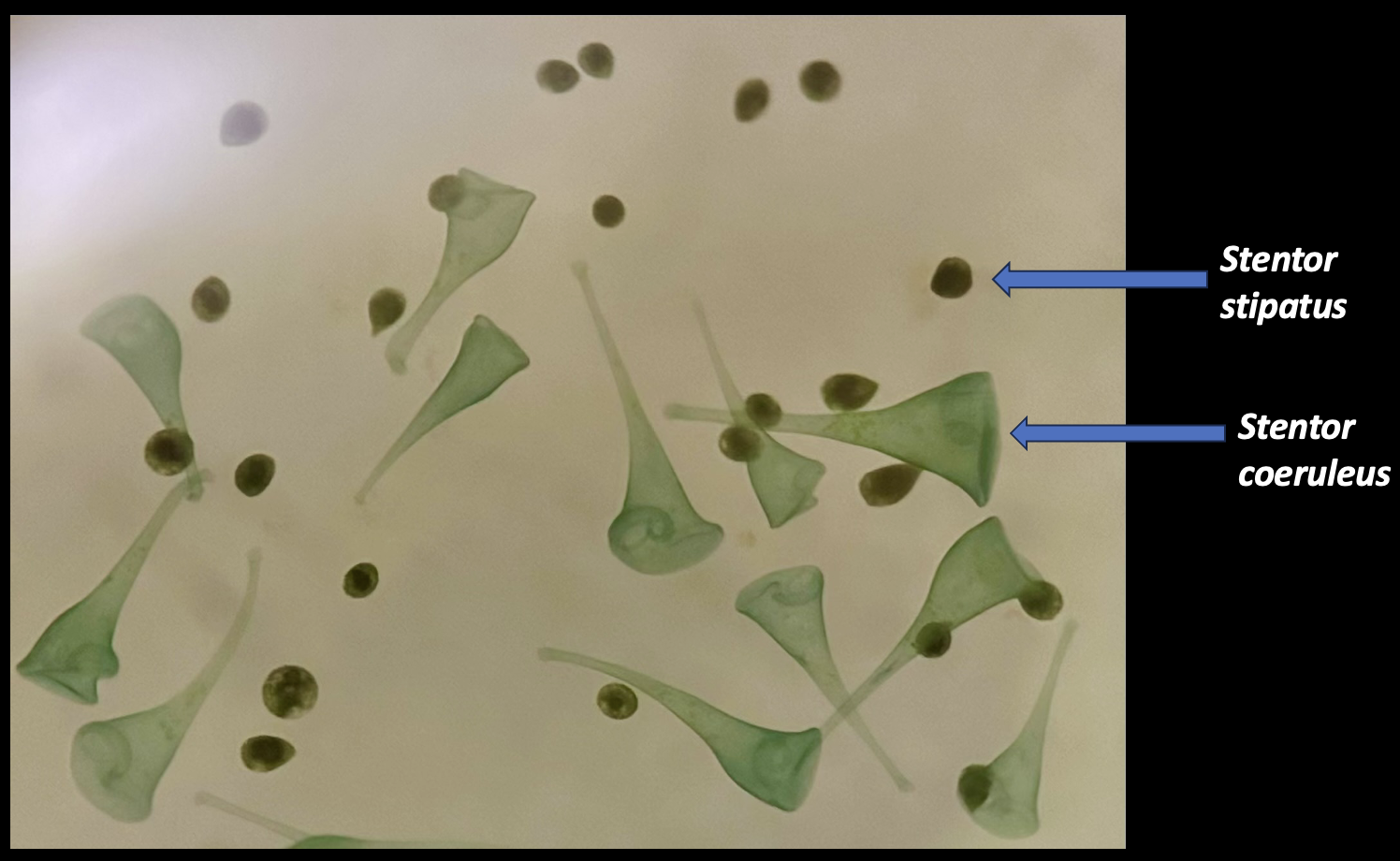
Stentor stipatus cells alongside Stentor coeruleus cells. Image by Deepa Rajan.
Extinction of innate preferences
Can a leopard change its spots? A tiger, its stripes? We countered the old adages in our discovery of a complete extinction of innate preferences in the pollinator Eristalis tenax.
Rajan D. H., Mishra A.,…Olsson S. (2025, August). Extinction of innate floral preferences in the generalist solitary pollinator Eristalis tenax. Journal of Chemical Ecology. DOI: https://doi.org/10.1007/s10886-025-01626-x
An Eristalis tenax hoverfly extends its proboscis as an innate response to an artificial flower model. Video by Deepa Rajan.
Effects of web geometry on spider sensitivity and habituation
Can spiders use their webs as tools to learn about their environment? Many spiders use their webs to detect vibrations from ensnared prey. Slingshot spiders, which are in the family Theridiosomatidae, take an active approach by constructing conical webs that they tension and release to intercept airborne prey before it contacts the web. They likely detect prey using vibrations transmitted via their setae, their web, or a combination of both. We tested habituation in slingshot spiders in situ in the Peruvian Amazon rainforest by measuring their response to repeated auditory stimuli. We also tested whether the geometry of the web could enhance vibration detection by comparing responses to auditory stimuli in slingshot spiders with conical webs versus those with simple three-strand webs. Because each response requires the web to be re-tensioned, this system highlights a distinctive form of behavioral plasticity in which responsiveness is coupled to the active tuning of an external sensory structure.
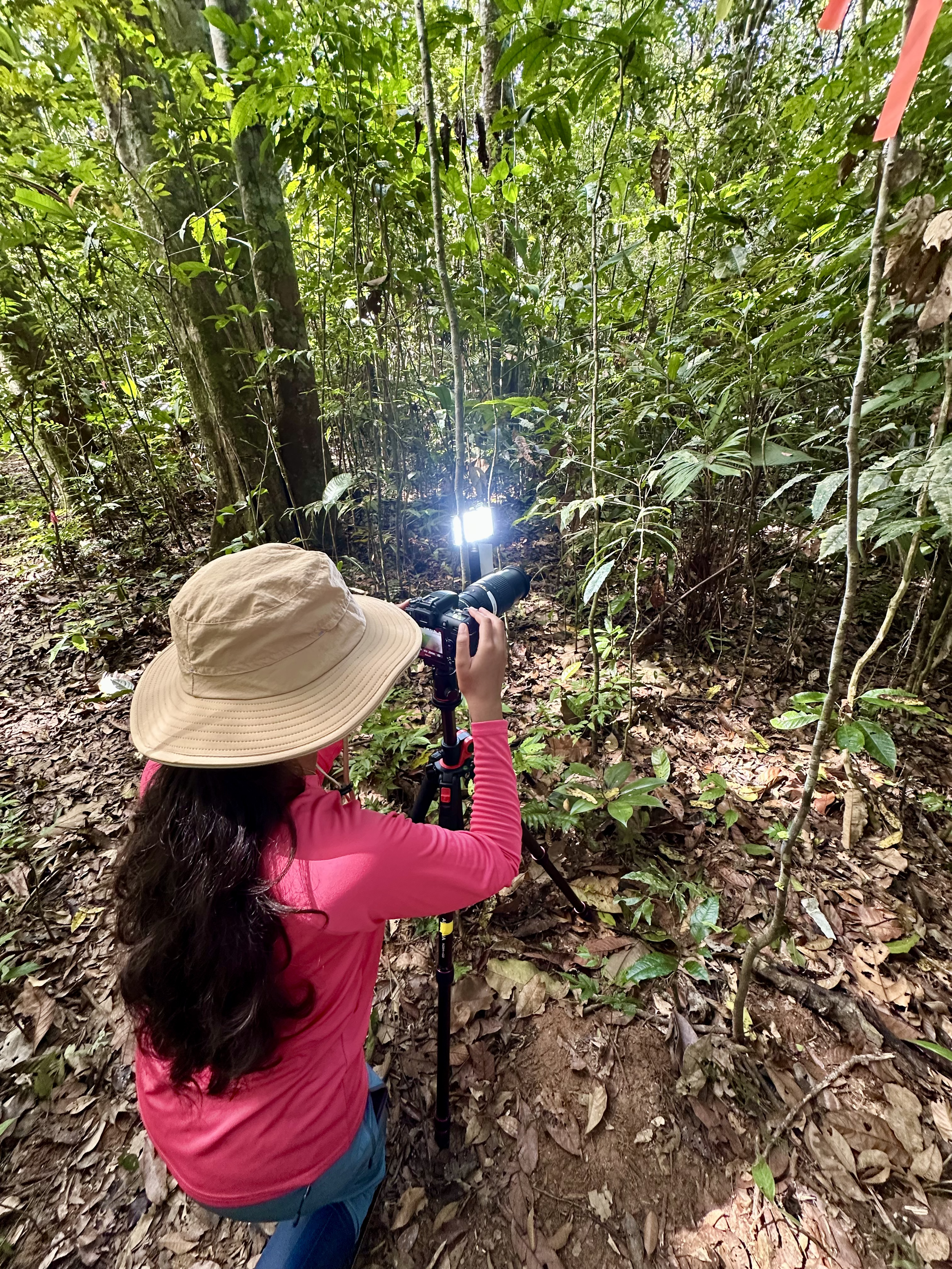
Chase D., Rajan D. H., Requejo M. R. R., Laura C. L. P., Clinton J., Bhamla S. (2026, April). The effects of web geometry on spider sensitivity and habituation to auditory stimuli. Integrative and Comparative Biology. Abstract: https://s3.amazonaws.com/xcdshared/sicb/app_content/2710_0325093934.pdf
I am setting up a habituation experiment for a slingshot spider in the Peruvian Amazon rainforest. Photo by Danielle Chase.
Effects of allosteric modulator drugs on cognitive function in Alzheimer’s disease
Alzheimer’s disease is the prevalent form of dementia and features progressive loss of cognitive function. Current FDA-approved treatments lack significant disease-modifying efficacy. Here, we discovered allosteric modulator drugs that improve cognition in mouse models of disease.
Moran S. P., Dickerson J. W., Plumley H. C., Xiang Z., Maksymetz J., Remke D. H., Rajan D. H., Doyle C. A., Niswender C. M., Engers D. W., Lindsley C. W., Rook J. M., Conn P. J. (2018, March). M1 positive allosteric modulators lacking agonist activity provide the optimal profile for enhancing cognition. Neuropsychopharmacology. DOI: 10.1038/s41386-018-0033-9
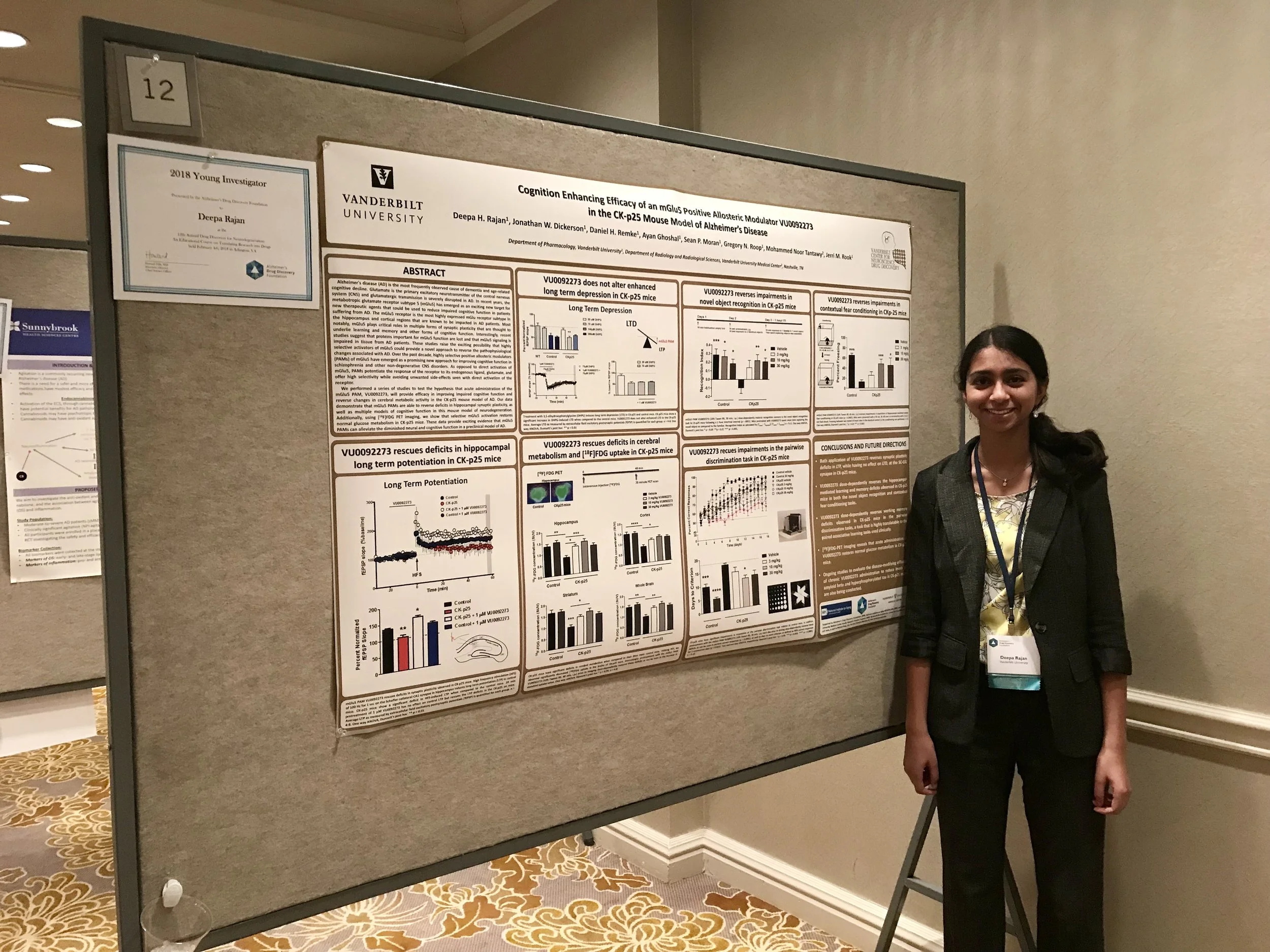
I am presenting my research on Alzheimer’s disease drug discovery at the 12th Annual Drug Discovery for Neurodegeneration Conference. Photo by Jerri Rook.